On this page
- What tourists actually buy
- Styles that sell
- Natural colours win
- Display that stops people walking past
- Packing for gifting
- Buying wholesale without overstocking
- Seasonality in Goa
- Caring for shell jewellery
- Beyond jewellery: shell buttons and trims
- Pricing so you keep a margin
- Avoiding stock that does not move
- Working with a reliable supplier
- Selling online as well as on the beach
- Telling the story of the material
Visitors to Goa arrive with a clear idea of what they want to take home: something that looks and feels like the coast. Shell jewellery fits perfectly, because it is light, easy to pack, affordable and honestly tied to the place. For owners of souvenir shops, beach stalls and flea-market tables, it is also a dependable product — if you choose well. This guide explains which handmade shell jewellery sells best to tourists, how to display it and how to buy wholesale without overstocking.
What tourists actually buy
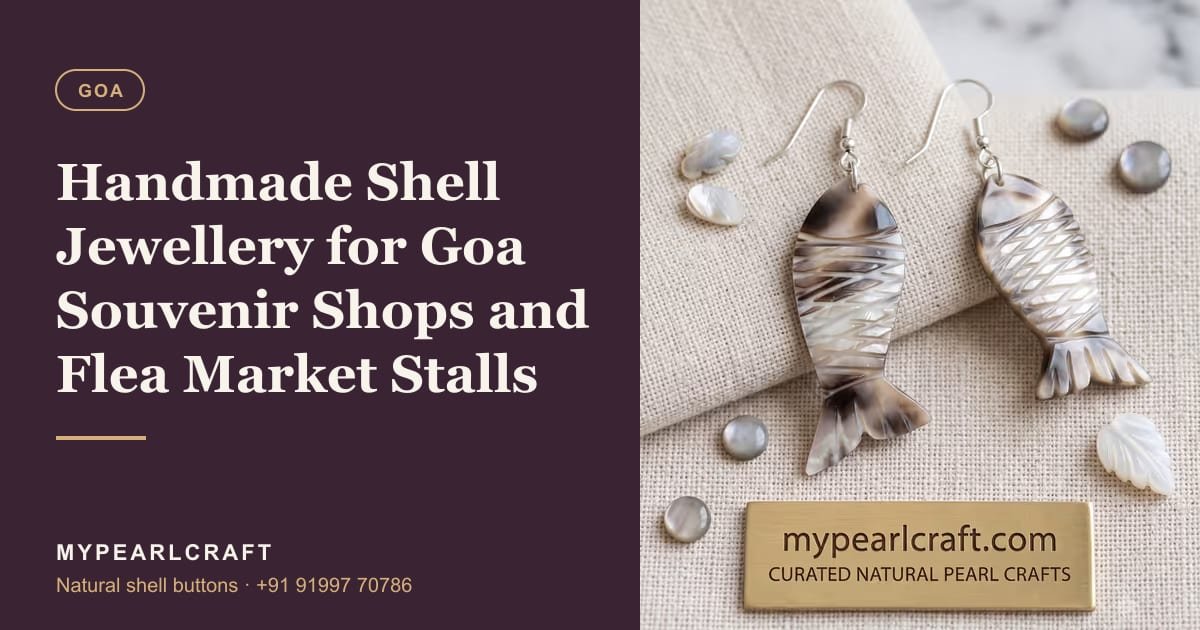
Most visitors buy something small and giftable. Earrings, pendants, bracelets and anklets in natural shell move fastest because they are affordable and easy to wear on the beach. Larger statement pieces sell too, but more slowly, and suit boutique stores with higher footfall. A balanced stock puts most of your money into small pieces and keeps a few eye-catching items for display.
Styles that sell
- Shell earrings: light studs and drops that suit casual beachwear.
- Pendants on cord or chain: single polished shells or discs, easy to gift.
- Bracelets and anklets: small shells or discs strung on cotton thread, popular as beach accessories.
- Charms and keyrings: low-price impulse buys and good for children and gifts.
Natural colours win
Shell’s own cream, white and soft pink tones are what visitors expect. Stalls that mix natural shell pieces with a few brighter accents — coloured thread, small beads — look lively without hiding the material. Keep the palette consistent across a display so it reads as a collection, not a jumble.
Display that stops people walking past
Shell jewellery looks best displayed simply. Use natural textures — driftwood, jute, linen — and good light. Hang earrings on small stands or cards at eye level, group pendants on a single board, and place a few larger statement pieces at the front. Price tags should be clear and visible; tourists hesitate when they cannot see the cost.
Packing for gifting
A small paper bag or card makes a piece feel like a gift. Add a short note about the material: "natural shell, handcrafted in India". Visitors like to know a product has a story, and a simple tag raises the perceived value without adding much cost.
Buying wholesale without overstocking
Start with a mixed assortment across the main categories, then reorder what sells. Track by style for the first month: note which pieces sell out in days and which sit on the shelf. A sensible approach is to order small, learn, and scale only the fast-moving styles. Ask for a mix of price points so every visitor can find something within budget.
Seasonality in Goa
Footfall peaks through the winter season from late October to February, with spikes around Christmas and New Year, and drops sharply in the monsoon. Place your main stock order a few weeks before the season, and keep a smaller reorder cycle during it. After the season, stock that remains is usually still sellable the next year, because natural shell does not date.
Caring for shell jewellery
Customers appreciate simple care advice. Keep shell jewellery away from perfume, chlorine and harsh cleaners, wipe gently with a soft cloth and store it dry. Including this on a small card helps reduce complaints and keeps the pieces looking good, which brings customers back.
Beyond jewellery: shell buttons and trims
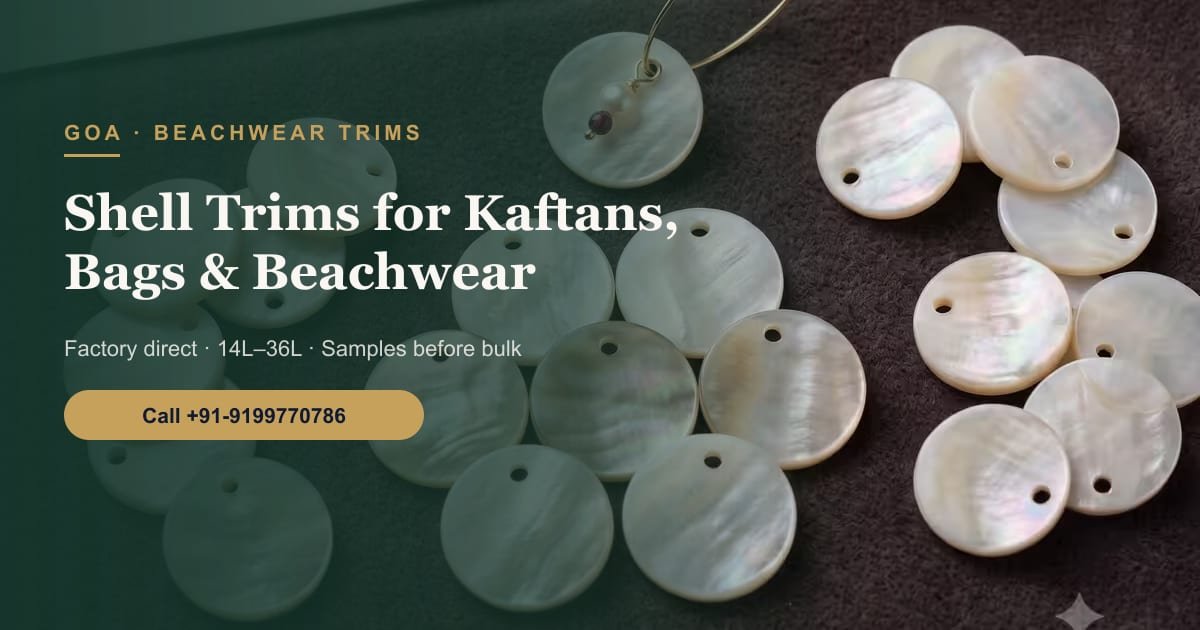
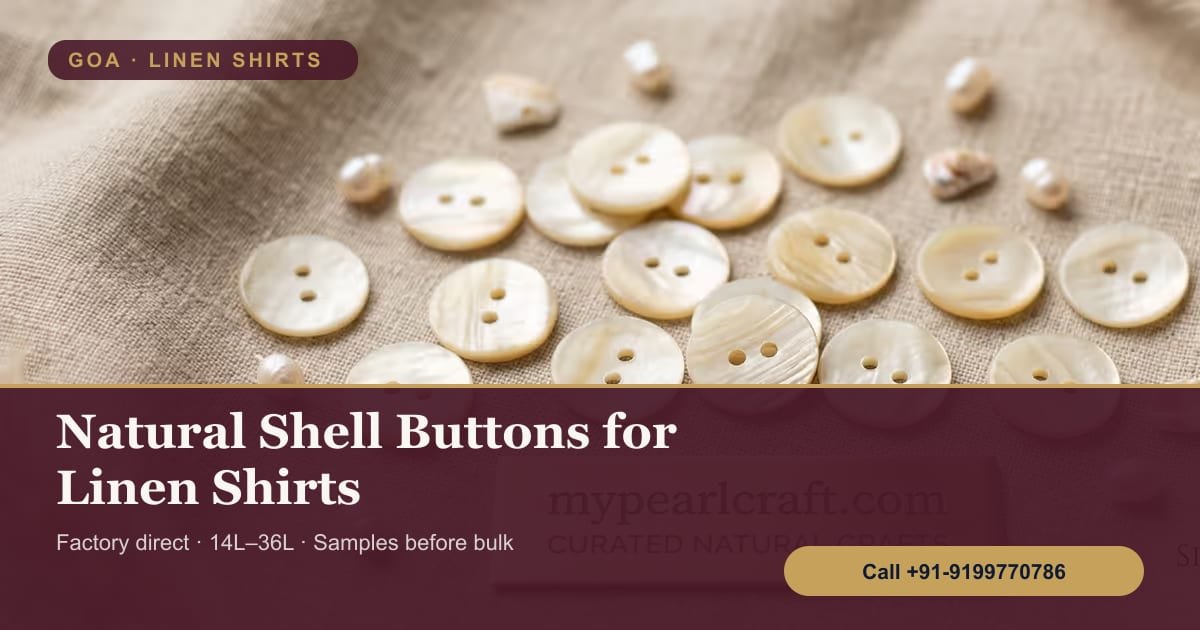
If you stock or make kaftans, shirts, bags or home décor, natural shell buttons and top-hole discs can add the same coastal feel to those products. Many Goa makers use the same supplier for both, which keeps shades and finish consistent between a shirt and the jewellery that goes with it.
Pricing so you keep a margin
Tourist markets reward clear, round prices. Work out your cost per piece including packing and transport, then aim for a selling price that leaves a healthy margin even after a little bargaining. Having a few price bands — small, medium and statement pieces — lets you serve every budget without discounting your best items.
Avoiding stock that does not move
Watch what visitors pick up but do not buy. If a style gets attention but few sales, adjust the price, display or colour before reordering. Keep notes through the season, because next year’s order should be built on what actually sold, not on what looked good in the catalogue.
Working with a reliable supplier
For a shop that depends on the season, delivery matters as much as price. Agree dispatch times before the rush, ask for photographs of the actual pieces, and keep a small reorder buffer for fast-moving styles. A supplier who ships on time and matches the samples is worth more than a slightly lower rate.
Selling online as well as on the beach
Many visitors remember a stall after they return home. A small Instagram page or simple website with photographs of your best pieces, prices and a way to order lets them buy again from anywhere. Natural shell photographs well in daylight on sand-coloured backgrounds, and online sales help even out the quiet monsoon months when tourist footfall drops.
Telling the story of the material
Visitors love to hear where things come from. Train your staff to explain in one sentence that the pieces are handmade from natural shell. A short, honest story turns a casual browser into a buyer and makes the piece more meaningful as a gift.
We make natural shell jewellery, buttons and trims and ship to Goa by courier. Tell us your shop type and budget and we will suggest an assortment and quote, with samples if you would like to see the finish first.
Order from the manufacturer
Need shell buttons for Goa?
MyPearlCraft has made natural shell and mother-of-pearl buttons for 50+ years in its own unit. Send size, hole type, shade and quantity — or a photo of your sample button.
- 01
Send your spec - 02
Get a quote - 03
Approve samples - 04
We make & ship
Stock sizes usually start at 500–1,000 pieces per size for wholesale pricing (confirmed in your quote). Samples first. GST invoice on every order.
Topics